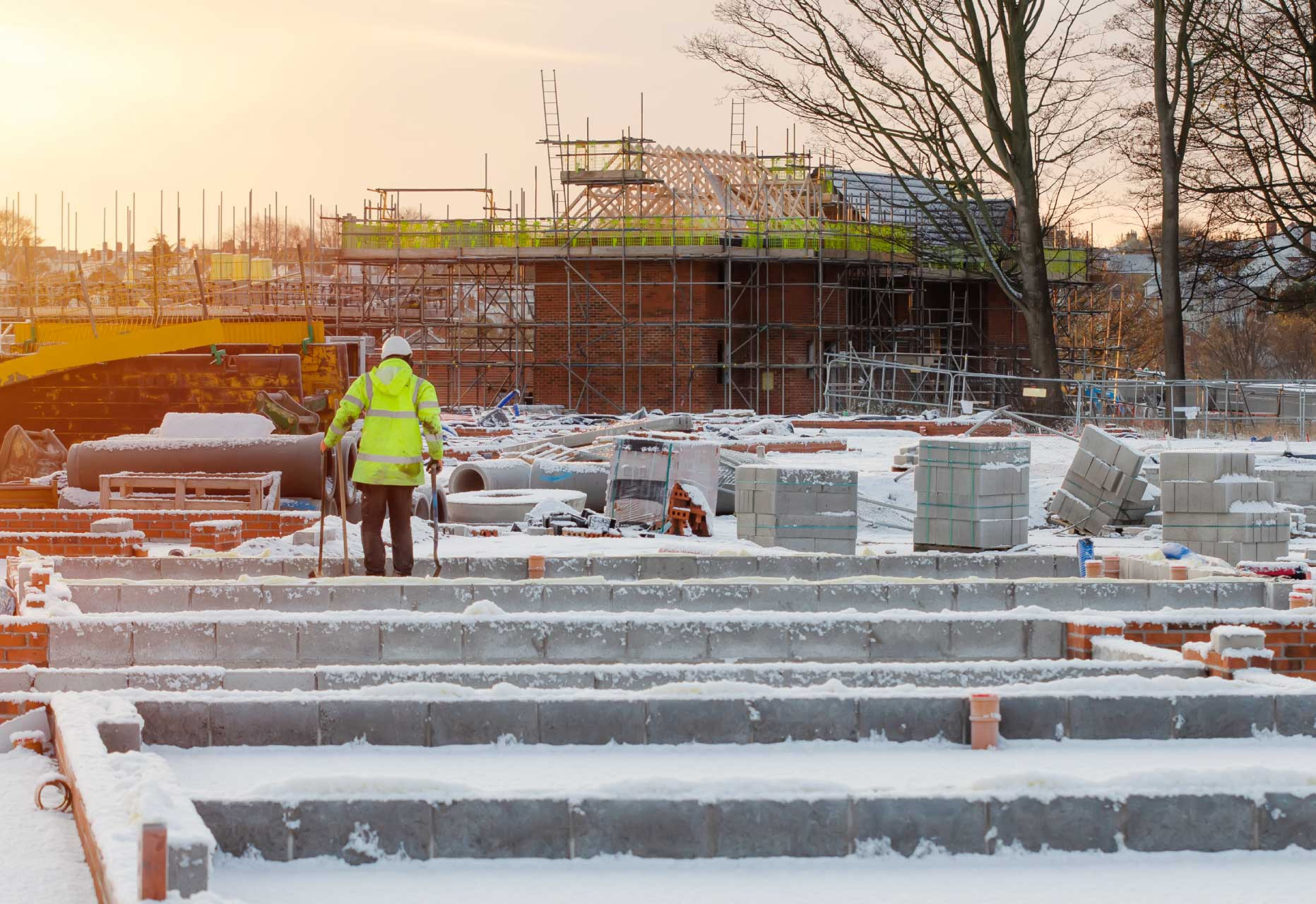
As the cold sets in and the days become shorter, winter brings fresh challenges to construction workers across the UK. Freezing temperatures, icy surfaces, reduced daylight and biting winds all combine to make the working day tougher, both physically and mentally. And while construction is never an easy job, the winter months can make it feel that little bit harder to keep going, which is why looking after workers’ wellbeing becomes even more essential.
Winter weather doesn’t just affect comfort, it increases risk. Slips, trips and falls are far more likely in wet or icy conditions. Cold hands can mean reduced dexterity, making even the simplest tasks more hazardous. Visibility drops quickly once daylight fades, and high winds can make working at height or operating equipment dangerous. On top of this, low temperatures can affect the body’s ability to function well, from cold stress and the potential for frostbite, to fatigue, joint pain, and slower reaction times.
But it’s not just physical safety that’s at risk. Winter can take a toll on mental health too. Long dark days, constant damp and chill, and the pressure to meet year-end deadlines all add up. For some, this season can trigger seasonal affective disorder (SAD), a type of depression linked to reduced sunlight. In an industry where silence about mental health remains an issue, it can be easy to miss the signs that someone is struggling.
This is where employers can make a huge difference. Simple, practical measures not only provide the right physical environment, they also show workers that their wellbeing matters. For instance, heated rest areas and facilities to dry wet clothes, besides offering physical comfort, remind people they are valued. Access to warm, non-alcoholic drinks, space to take regular breaks, and a steady supply of high-energy food can help the body stay warm and alert.
It’s also about having the right kit. Suitable winter PPE, including layers of moisture-wicking, insulating and waterproof clothing, gloves that keep hands warm but functional, and thermal liners for hard hats that don’t compromise safety, makes a big difference in keeping workers safe, comfortable, and able to work to a high standard. Workers should also feel able to take warm-up breaks without worrying about what others might think, and to speak up if conditions feel unsafe.
Proactive site management is key. Although gritting walkways early, installing additional lighting, and rescheduling higher-risk tasks to warmer or brighter parts of the day are obvious safety measures, they’re also signs of a working culture that puts people first. When hazards are identified and addressed quickly, it reduces the risk of incidents, supports compliance with health and safety regulations, and contributes to a more efficient, well-managed site where people can operate with confidence.
Winter can test even the toughest on site, but workers can do things to look after themselves and each other. If someone is struggling with the cold, feeling unwell, or noticing their mood dip, saying something early helps stop problems before they grow. Checking in with co-workers, taking breaks when necessary, and not pushing through for the sake of pride are signs of professionalism, not lack of resilience. Keeping a spare pair of dry socks, making time to warm up at the start of the day, or sharing a hot drink with a colleague can lift spirits and build camaraderie, which helps keep the whole team more connected.
At We Are Footprint, we know that Construction is built on people, and looking after those people matters – not just when it’s easy, but when conditions are at their toughest. Winter brings added pressures, but it doesn’t have to mean increased risk or quiet struggle. The right preparation, clear communication and a supportive environment, helps everyone to get through the season safely and well.